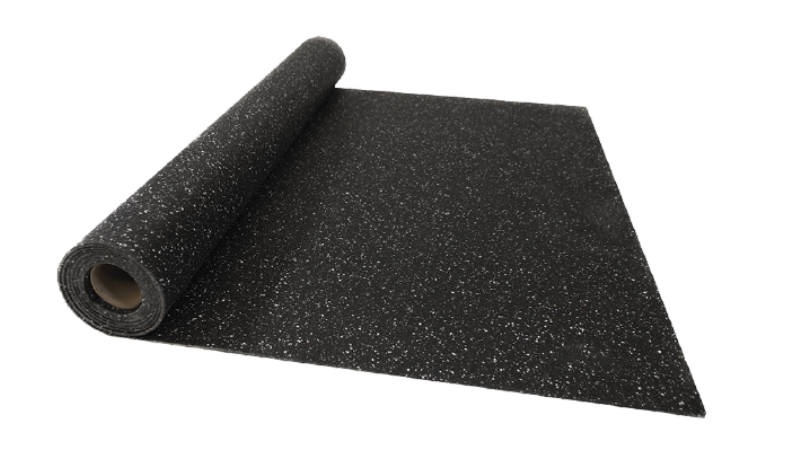
To choose the right acoustic underlay, start with the floor construction, expected loads and target impact sound rating. A mat installed beneath a floating screed has different requirements from a thin underlay fitted directly beneath a click-lock floor. This guide explains how to shortlist materials and compare test data for apartments, hotels and commercial projects.
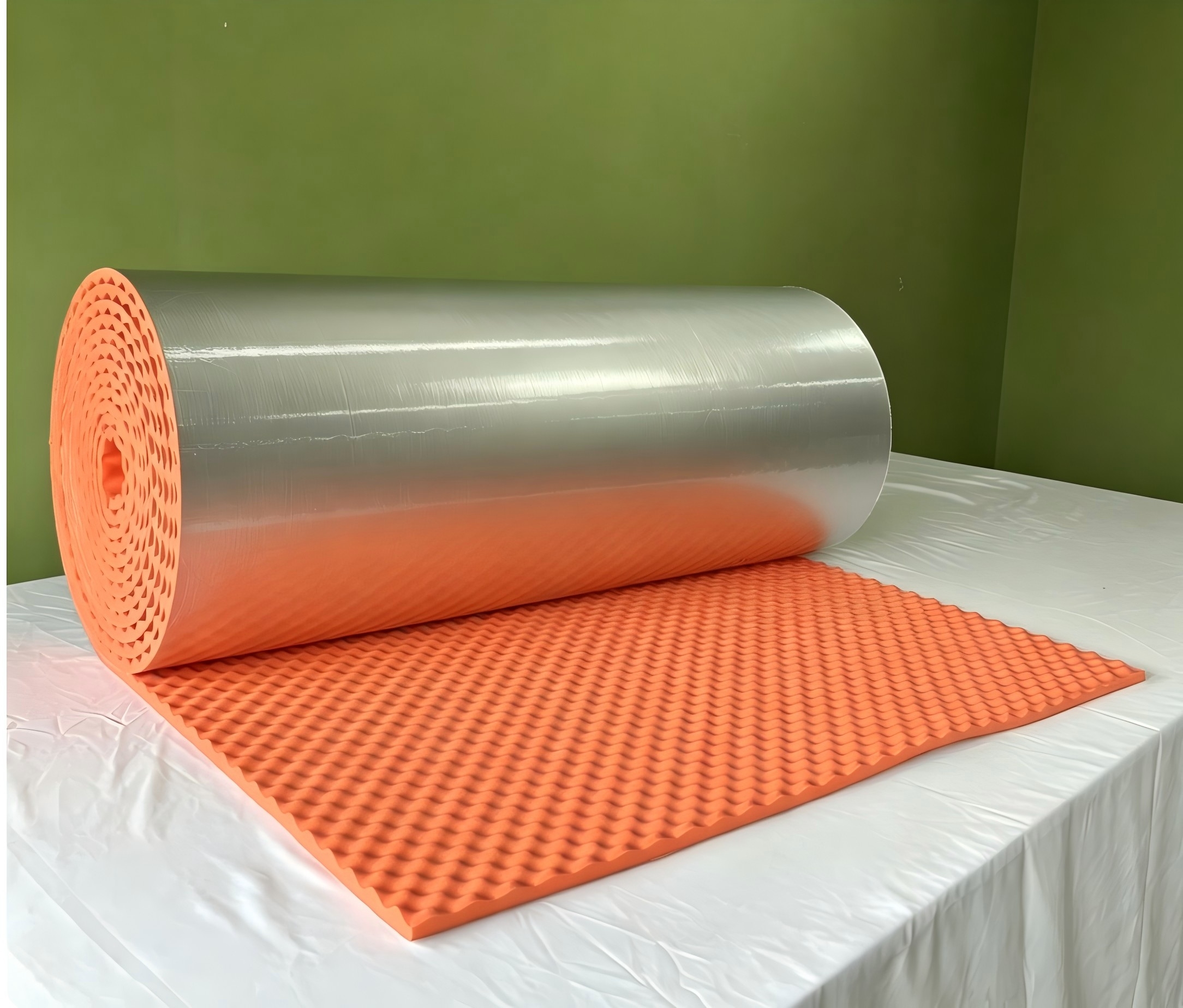
ANIKA polyurethane (PU) acoustic underlay supplied in rolls.
Acoustic underlay, also called acoustic underlayment, is a resilient layer installed within a floor assembly. Depending on the system, it can sit directly beneath a compatible floor finish or beneath a floating screed.
Footsteps and dropped objects cause the floor to vibrate. A resilient layer helps reduce the transfer of that vibration into the supporting structure and the resulting impact noise heard in rooms below. The result depends on the complete assembly and its installation.
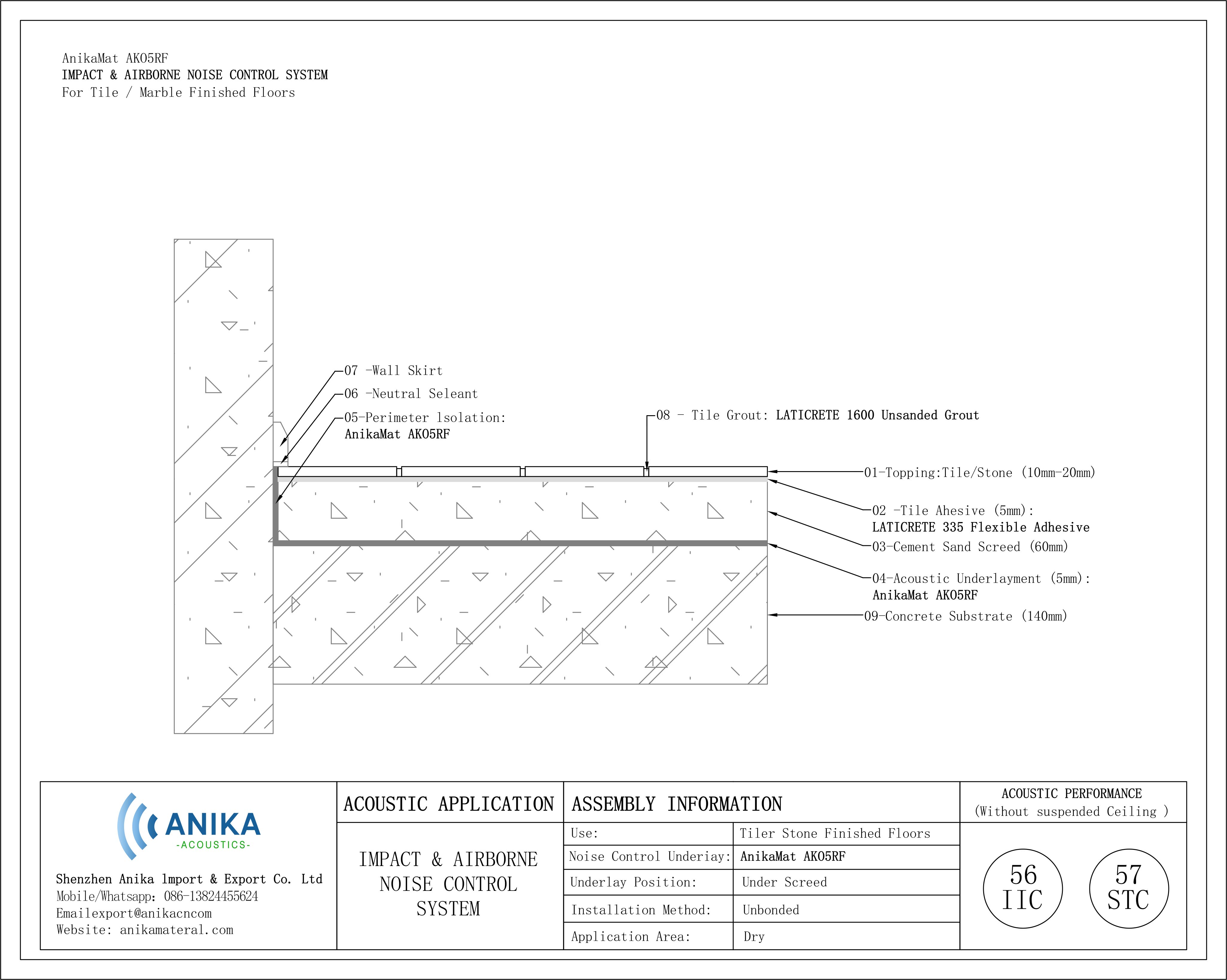
Example floor build-up with acoustic underlay and a tile or stone finish.
Compare products using the same metric and a comparable test build-up. When a specification calls for an assembly IIC rating, request the floor-ceiling test report that supports that rating.
Rubber acoustic underlay is an option for selected concrete-based floors and floating screed assemblies. For projects with sustained loads, compare compression and acoustic test data for the proposed rubber grade.
Foam underlay includes polyurethane (PU), XPE and EVA grades with different thicknesses and compression properties. Selected grades can be used beneath compatible floor finishes. ANIKA also supplies a 16 mm PU option for compatible floating screed assemblies.
Use the available floor height, loading conditions and tested assembly to compare grades. Material density alone gives an incomplete picture of impact sound performance.
Thickness affects how the underlay fits and behaves under load. Use impact sound results and compression data for the specific grade to judge whether it suits your floor system.
Confirm approval for the proposed underlay, floor finish and heating system. Ask for the underlay's thermal resistance and operating temperature limits, then check them against the floor system requirements.
Send a floor section or list of layers, the final floor finish, the target impact sound rating, the required area in square metres and the delivery destination.
Explore rubber, PU, XPE/EVA and composite options, or contact ANIKA for samples, available test reports and wholesale pricing.

Name: Sherry
Mobile:086-13824455624
Tel:086-13824455624
Whatsapp:8613824455624
Email:export@anikacn.com
Add:4th Floor, Building 210, Tairan Industrial Zone, Shennan West Road, Futian District
We chat